

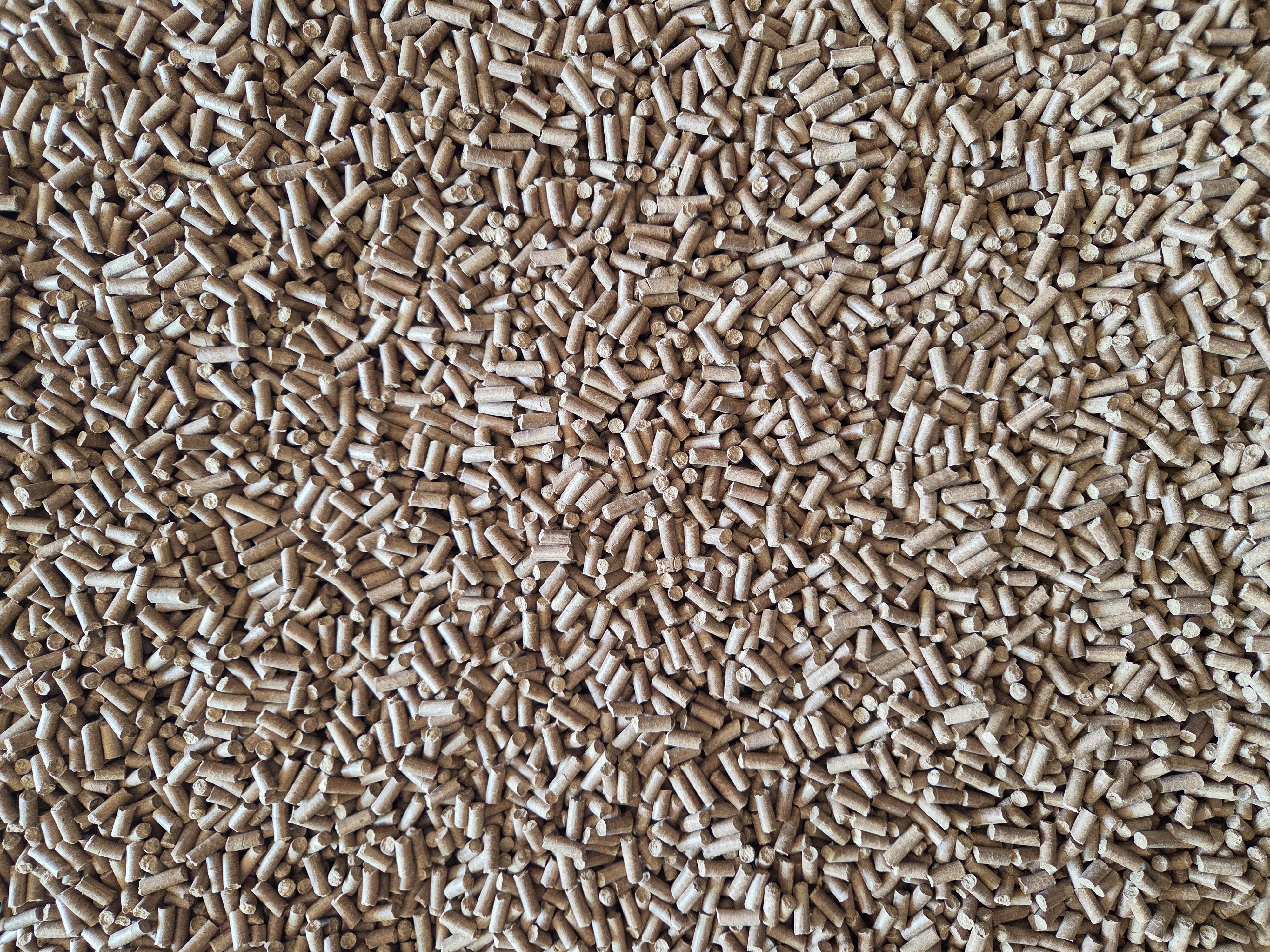
What is lignocellulosic biomass
The term "lignocellulosic biomass" refers to any organic material of plant origin whose structural skeleton is composed of three main polymers: cellulose, hemicellulose and lignin. These three components form the cell walls of all woody and semi-woody tissues: trunks, branches, leaves, stems, shells and pits.
It is the most abundant form of renewable biomass on the planet: every year photosynthesis fixes approximately 120 billion tonnes of carbon in lignocellulosic form. The fraction actually used for energy is minimal; the remainder decomposes, releasing back into the atmosphere the carbon previously absorbed.
Chemical composition and gasification performance
The chemical composition of biomass directly determines the quality of the syngas and biochar produced:
- Cellulose (38–50%): linear glucose polymer, decomposes at 315–400 °C producing predominantly non-condensable gases (CO, H₂, CO₂). High cellulose content means good syngas yield.
- Hemicellulose (23–32%): branched pentose and hexose polymer, decomposes at 220–315 °C. Contributes to the initial pyrolysis phase with CO₂, CO, H₂O and light tars.
- Lignin (15–25%): aromatic phenolic polymer, decomposes at 280–500 °C. It is the main source of heavy tars, but also of high-aromatic-content biochar: the higher the lignin, the more stable and valuable the BioGS Char produced.
The fuel: pellets from any plant biomass
The BioGS-1.0 is pellet-fed; the system is designed to accept pellets produced from any vegetable organic material: agricultural residues, pruning residues, forestry cleaning, wood processing by-products, stems, shells and pits.
Pellets can be used pure or mixed with small quantities of wood chips, dried fruit shells, pits and similar materials, provided the particle size is compatible with the feed system and moisture remains within the required parameters.
- Maximum moisture: 10%. The gasification process requires dry biomass: moisture above 10% reduces the temperature in the oxidation zone and degrades syngas quality. Pellets, by their nature (produced by drying and hot pressing), typically reach 6–8% moisture and satisfy this requirement without additional treatment.
- Particle size: pellets with diameter 6–8 mm and length ≤ 40 mm; for mixed materials (wood chips, pits, shells), recommended maximum particle size 20 mm. Fine particles (dust, loose sawdust) should be avoided in excessive quantities as they cause compaction of the reactor bed.
- Ash content: wide tolerance thanks to the open core geometry; attention should be paid to biomasses with high silica and potassium concentrations (grape marc, straw, etc.) which lower the ash melting point and may promote clinker formation.
- Compatible biomass types: hardwood (beech, oak, ash, hornbeam), softwood (fir, pine, larch), agricultural prunings (vine, olive, orchards), shells and pits (hazelnut, almond, walnut, olive, cherry), wood processing residues (shavings, sawmill waste), organic vegetable industrial residues.
Tolerance to resins is a distinguishing characteristic compared to direct combustion boilers; however, despite the high tolerance relative to traditional combustion systems, certain biomass types are unsuitable, such as high-silica herbaceous feedstocks (rice husks, cereal straw, miscanthus): the risk of clinkerisation in the reactor and glassy fouling on the burner makes them incompatible with reliable operation. For a complete treatment of the damage mechanism, see the dedicated article: Silica in biomass: the hidden risk for gasifiers.