
Electricity from pellets: is it really possible?
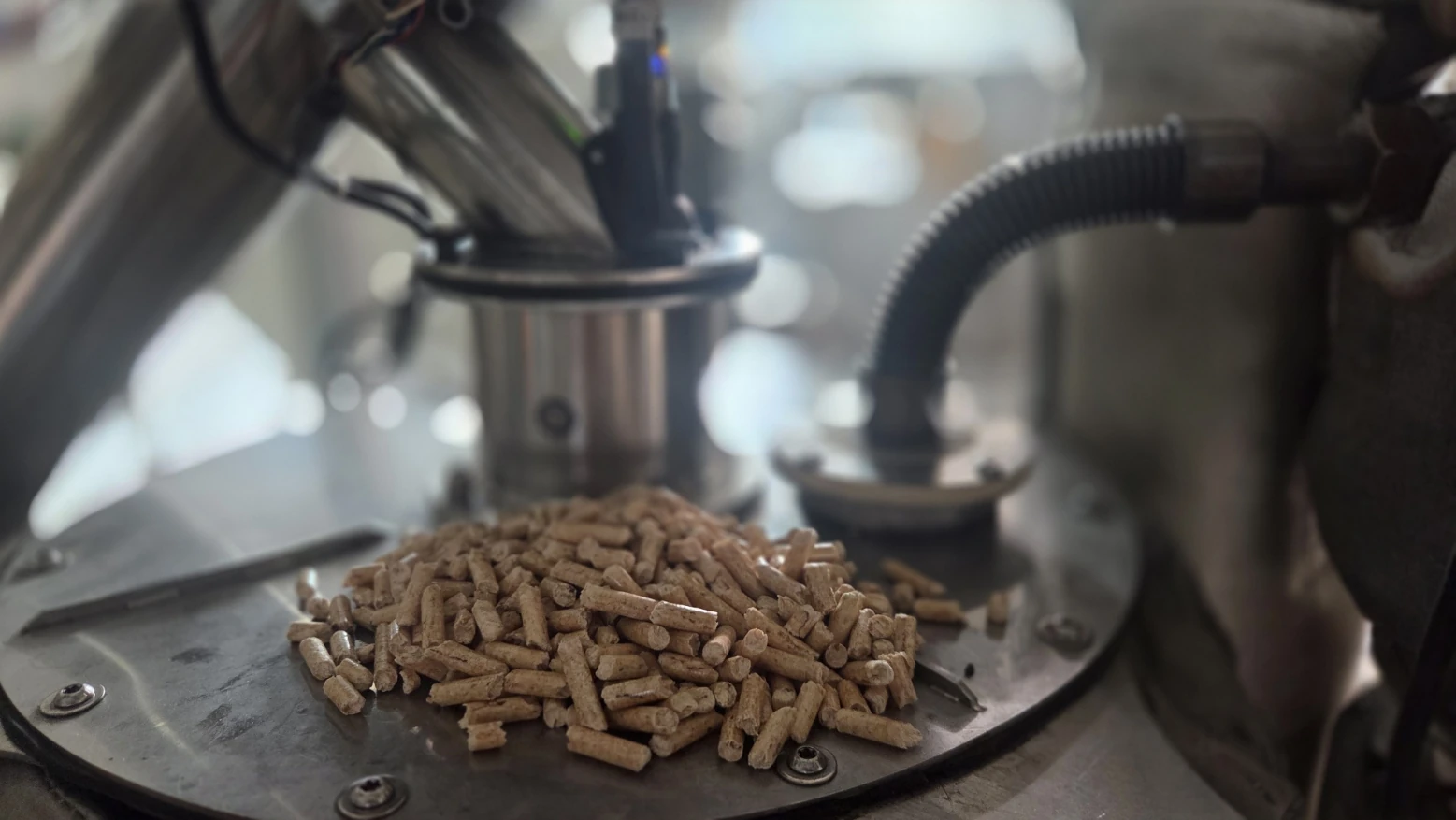
Yes, it is possible to produce electricity from pellets, but not with a conventional stove or boiler.
Standard pellet appliances consume electricity to power fans, augers and ignition systems, but they are not designed to generate it. To obtain electricity from biomass, a conversion technology capable of turning the heat of combustion into electrical energy must be integrated.
This is the principle behind pellet micro-cogeneration, a technology that makes it possible to produce heat and electrical energy at the same time from a single energy source.
Why a pellet stove does not produce electricity
Burning pellets generates thermal energy, not electric current. Turning heat into electricity requires an additional technological step:
- combustion of the biomass;
- conversion of the heat into mechanical energy or directly into electrical energy;
- production of usable electrical energy.
A conventional stove or boiler stops at the first step: the heat is used to warm the system's water or the living spaces.
Pellet micro-cogeneration technologies available today
Several technological solutions currently exist for producing electrical energy from pellets or other solid biomass. Each has different characteristics in terms of performance, efficiency, plant complexity and flexibility of use.
1. Stirling engine powered by direct combustion of pellets
The Stirling engine is an external combustion engine that exploits the temperature difference between a hot source and a cold source to generate mechanical motion and, in turn, electrical energy. In this configuration, the heat needed by the engine is supplied directly by burning pellets. This principle is used in a solution that has been on the market in a European country since 2015.
For more on how the Stirling engine works, see the dedicated article.
2. Gasification with an internal combustion engine
In this technology the biomass is not burned directly. The fuel is first converted into syngas through a pyrolysis and gasification process. The resulting gas is then cooled, cleaned and used to power an internal combustion engine connected to an electric generator.
This solution is mainly used in larger systems, generally starting from around 20 kWe, making it less suited to small residential installations.
3. Gasification with a Stirling engine
This is the technology adopted by the BioGS-1.0. Here too the biomass is first converted into syngas through gasification. The syngas is then burned in a dedicated chamber to supply the heat needed by the Stirling engine.
Compared with direct combustion of pellets, this approach offers several advantages:
- higher combustion temperatures;
- greater efficiency in electrical conversion;
- lower exhaust emissions;
- better process control;
- greater flexibility in the type of biomass that can be used.
Separating the gasification stage from the energy conversion stage also allows for more efficient fuel management.
In its standard configuration, BioGS-1.0 produces 24 kWh of electrical energy and 140 kWh of thermal energy per day, consuming around 1.9 kg/h of pellets (or equivalent biomass) and producing 220-240 g/h of biochar.
4. Thermoelectric generators based on the Seebeck effect
The Seebeck effect makes it possible to convert a temperature difference directly into electric current, without engines or moving mechanical parts. This is a real and well-established technology for:
- autonomous sensors;
- portable devices;
- very low power applications.
In the field of residential micro-cogeneration, however, it remains an experimental solution, mainly due to its limited conversion efficiency compared with technologies based on the Stirling engine or on gasification.
Which technologies are the most mature today?
In the residential and small-scale cogeneration sector, the most technologically established solutions are those based on the Stirling engine. Their constructive simplicity, low maintenance requirements and reliability in continuous operation have favoured their adoption over other technologies.
The main difference instead concerns the heat source used:
- direct combustion of pellets;
- biomass gasification followed by combustion of the syngas.
Gasification or direct combustion: what are the differences?
Both approaches make it possible to produce thermal and electrical energy at the same time, but they have different characteristics.
Greater flexibility in biomass choice
Gasification allows a wider range of fuels to be used compared with systems that require certified pellets. This can reduce operating costs and increase fuel availability.
Biochar production
One of the most interesting advantages of gasification is the production of biochar. Biochar is a stable form of plant-based carbon that can be used as an agricultural soil improver and as a carbon sequestration tool. Direct combustion systems do not generate this by-product.
Potentially negative carbon balance
Part of the carbon contained in the biomass is locked into the biochar instead of returning to the atmosphere. For this reason, a gasification-based system can achieve a carbon-negative balance when the entire cycle is managed sustainably.
Conclusion
Producing electrical energy from pellets is technically possible thanks to micro-cogeneration systems. The technologies available today include Stirling engines powered directly by pellet combustion, gasification systems with an internal combustion engine, gasification with a Stirling engine, and thermoelectric generators based on the Seebeck effect. Among these, Stirling-engine-based solutions are today's reference point for small-scale cogeneration, while gasification adds advantages such as flexibility in biomass use, biochar production and a potential carbon-negative balance.
To learn more about sizing, autonomy and installation, also see the dedicated FAQ page.
Related questions
For a preliminary estimate for your case: Simulate BioGS-1.0 for your home. Data, formulas and sources of the calculation: methodology.