

Introduction
In an off-grid house, photovoltaic panels with storage cover consumption well from spring to autumn, but they struggle exactly when they are needed most: in winter, when sunlight decreases and the need for heat and electricity increases.
There are essentially two ways to close this gap: increasing storage capacity, or adding a supplementary energy source. The right choice depends on the characteristics of the building, its consumption and how it is used, but it is important to understand that the problem stems from a structural seasonal condition, not simply from a photovoltaic system that is too small.
Why the problem is structural, not a matter of sizing
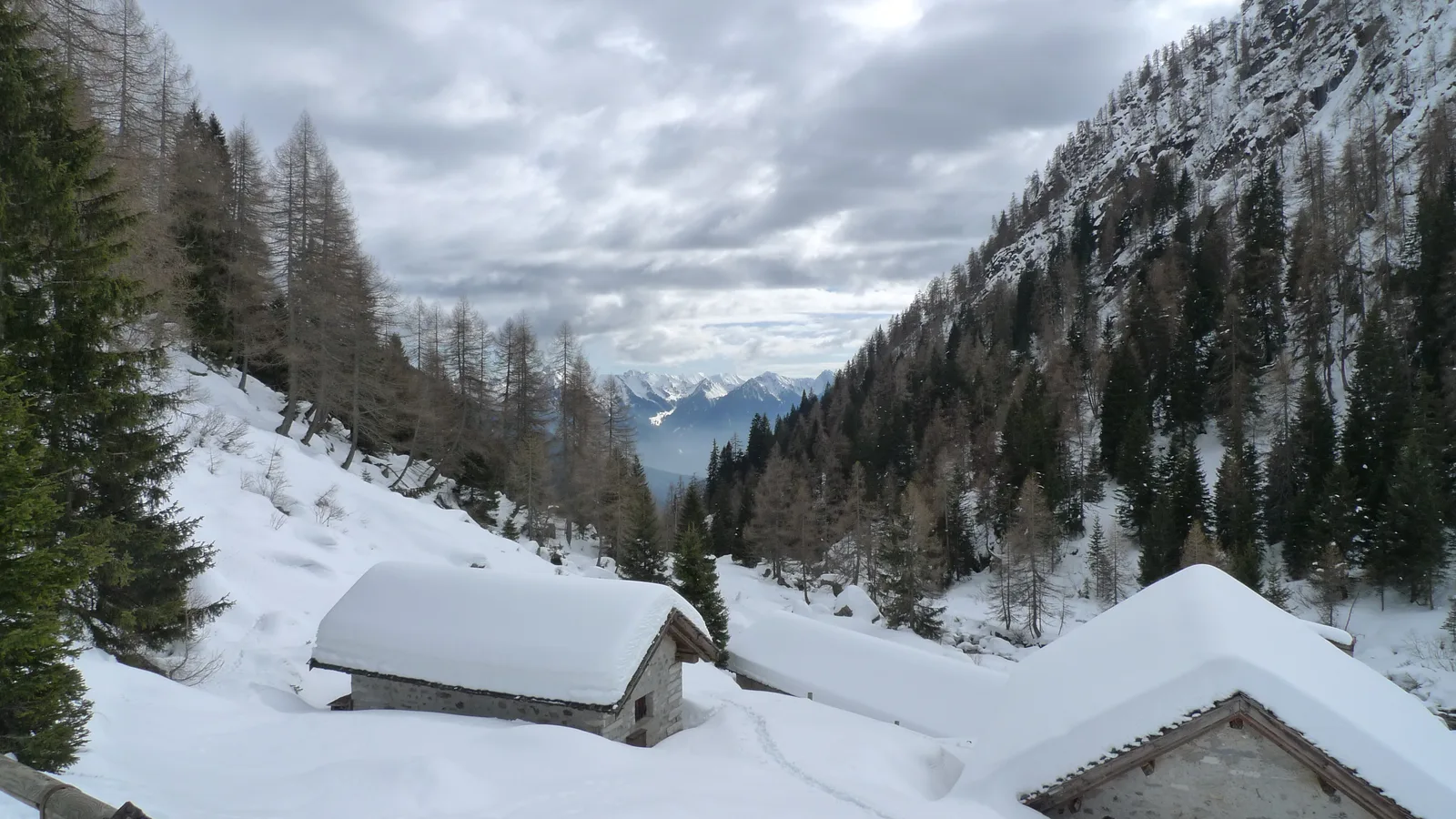
In the mountains or in an isolated cabin, winter solar radiation is reduced by shorter days, the sun's lower position on the horizon, often shaded slopes, and snow that can cover the panels for days. This is exactly the period when energy needs reach their peak: consumption rises for space heating, for domestic hot water production, and, in the case of an occupied building, also for lighting and electrical appliances.
In other words, the minimum of photovoltaic output coincides with the maximum of consumption. For this reason the problem cannot simply be solved by adding a few more panels: a system sized to fully cover winter needs would often end up excessively large and underused for the rest of the year.
The solutions, with real costs and limits
Oversizing the battery storage. Electrical storage is very effective for getting through one or a few cloudy days, but it quickly becomes expensive when trying to compensate for weeks or months of low solar radiation. Covering long winter periods would require batteries of very high capacity, with investments that are hard to justify in most off-grid applications. Furthermore, electrical storage does not directly address the main winter energy need: heat.
Backup generator (diesel or petrol). This is a common solution in systems isolated from the power grid. It offers reliability and low initial investment, but has some concrete limitations: the noise can be incompatible with nighttime use or with the quiet sought in a mountain hut or cabin; it is also a system with a significant impact in terms of exhaust emissions. In addition, the heat generated by the engine is generally dissipated into the environment instead of being used for heating or domestic hot water.
A source that produces electricity and heat together. This is the less well-known solution but, in many cases, the one most consistent with the actual problem. In an isolated building, winter heat demand is almost always greater than electricity demand. For this reason it can make sense to use a technology that produces both forms of energy at the same time, using a single fuel and a single system.
Biomass micro-cogeneration converts pellets, firewood or wood chips into electricity and heat, and it also works without a grid connection. In a mountain or isolated setting this approach offers two significant advantages. On one hand, the fuel can be sourced locally or produced from biomass available nearby, reducing dependence on fossil fuels transported from far away. On the other hand, the heat produced is not a waste product but is used for heating and domestic hot water, which normally represent the largest share of winter energy consumption.
It should nonetheless be stressed that there is no universal solution. If a cabin is used only for a few weekends a year, with low consumption and no practical management of biomass, a backup generator can remain the simplest and most economical choice. Micro-cogeneration, on the other hand, shows its full potential in buildings occupied continuously, even if only seasonally, and characterized by significant heat demand. Under these conditions, the advantage of simultaneously producing electricity and heat becomes concrete.
An indicative case: a mountain hut occupied in winter
To provide a realistic order of magnitude, let's take the case of a well-insulated mountain hut occupied continuously during winter. On a cold day, the heat demand for heating and domestic hot water can be on the order of 70 kWh/day, while electricity consumption for lighting, refrigerator, water pump and small appliances can be around 8 kWh/day.
As an example, let's consider using a BioGS-1.0 micro-cogenerator. The system can produce up to about 24 kWh of electricity and 140 kWh of heat per day, with a ratio between electrical and thermal energy of about 1:6. To cover a heat demand of 70 kWh/day, about 12 hours of operation are enough. During this same period the system produces about 12 kWh of electricity, more than the 8 kWh required by the building: the surplus, roughly 4 kWh, can be stored in the batteries or converted into additional heat. Daily pellet consumption comes to about 26 kg/day, equivalent to just over 780 kg/month during the coldest period.
The figures given are purely indicative and depend on factors such as local climate, building insulation, how the structure is used, and the operating conditions of the system.
Energy storage
A 700-800 L puffer tank makes it possible to spread the heat produced during the generator's operating hours across the whole day. This reduces the number of start-stop cycles, improving the system's operating stability. To learn more, read the dedicated article: Puffer tank: what it is and why it is used.
In a setup like this, the battery does not need to cover the entire daily energy demand, as happens in a purely photovoltaic system. Instead, it mainly needs to power the loads that occur during the hours when the micro-cogenerator is not running. With an average consumption of about 8-10 kWh spread over 24 hours, an 8 kWh usable battery is generally a reasonable compromise between autonomy and cost. Naturally, sizing must also be checked against instantaneous power peaks, not just daily energy consumption.
Inverter
The generator provides a relatively modest continuous electrical output, on the order of 1 kW. However, the typical instantaneous peaks of a household load, such as a pump starting up or several appliances switching on at the same time, can require much higher power. For this reason the inverter must be sized based on the maximum power demanded by the load, not on the nominal power of the micro-cogenerator. For a hut of this size, a 6 kW hybrid inverter is generally an adequate solution.
How it plays out over the year: solar and micro-cogeneration balance each other
The goal of micro-cogeneration is not to replace solar power, but to compensate for its seasonal limitation. During the warmer months, solar power normally remains the main source of electricity thanks to the high level of available sunlight. In this period heat demand is limited almost exclusively to producing domestic hot water, so the micro-cogenerator runs for only a few hours and consequently produces little electricity.
In winter the opposite happens: heat demand rises significantly and the micro-cogenerator runs for more hours each day. Electricity output therefore automatically increases as well, precisely in the months when the solar contribution decreases. The two technologies thus show a natural complementarity: one follows the availability of sunlight, the other follows heat demand.
What is needed to install it in an isolated setting
In addition to correctly sizing the batteries and thermal storage, a micro-cogeneration system requires a few logistical aspects to be carefully evaluated:
- adequate space for biomass storage;
- accessibility for periodic fuel resupply;
- accessibility for routine maintenance;
- managing biochar removal, to be carried out roughly every 60 hours of operation;
- assessing how the fuel will be transported to the site.
In many high-altitude installations, fuel logistics is precisely the main design factor, at times more important than the technology itself.
Conclusions
For an off-grid house there is no single solution that fits everyone. Solar power with storage often remains the simplest and most effective choice for most of the year, but it runs into significant limits during winter, especially in the mountains, when solar output drops just as energy consumption reaches its peak.
When heat demand is high and the building is used with a certain continuity, biomass micro-cogeneration can be a particularly interesting addition because it makes it possible to produce electricity and heat at the same time from a single energy source. This way it is possible to reduce dependence on large storage systems, limit reliance on emergency generators, and improve energy autonomy during the periods of the year that are most critical for solar power.
The final choice should always take into account not only the initial investment, but also fuel availability, logistical costs, maintenance needs, and the level of service continuity required by the building. Weighing all of these factors together makes it possible to identify the most suitable solution for a given setting and to build a genuinely reliable energy system throughout the year.
To explore further practical and application-related aspects, also see the Frequently asked questions about BioGS-1.0.